
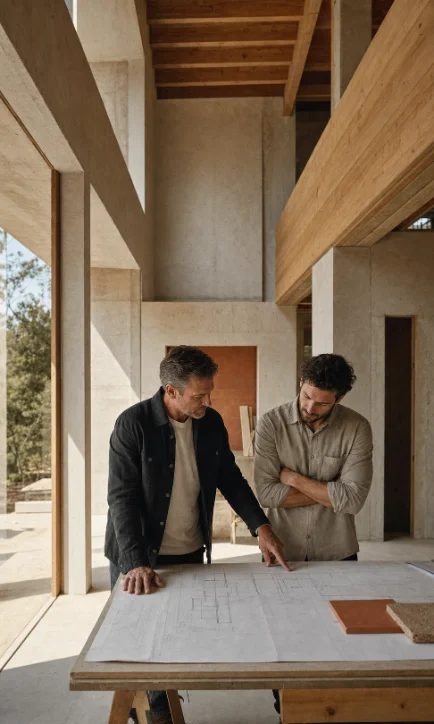
Why design-build has to educate before it can sell
A meaningful share of design-build search traffic comes from people who don't yet know design-build is a distinct delivery method — they're searching for architect and contractor separately, or just home renovation planning, without realizing a combined approach exists. Content that captures and educates this audience reaches buyers earlier than competitors selling only the end result.
This is a genuine content opportunity: ranking for what is design-build or design-build vs general contractor captures a searcher before they've even framed their project the way a design-build firm would want them to.
Design-build vs. design-bid-build comparison content
Honest comparison content — explaining design-build alongside traditional design-bid-build, including genuine trade-offs and situations where the traditional approach might actually make more sense — builds more credibility than one-sided content that only promotes design-build.
This kind of honest comparison content also performs well in AI search, since comparison questions are exactly what AI Overviews and chat assistants are built to answer directly.
Portfolio content that shows the whole process
Because design-build's value proposition includes the process itself, portfolio content that shows the design phase alongside the build — not just finished-project photos — demonstrates the actual thing being sold. A finished kitchen photo alone doesn't convey the single-point-of-contact coordination that's the real differentiator.
Case studies that walk through a project from initial design conversation to completion, including how changes were handled along the way, give a prospective client a concrete sense of what working with a design-build firm actually feels like.
Single-point-of-contact as the core value proposition
The core design-build pitch — one team, one contract, one point of accountability, rather than coordinating an architect and contractor separately — deserves direct, specific content, not just an implied benefit. Buyers who've heard nightmare stories about architect-contractor coordination problems respond to this addressed head-on.
Being specific about how disputes or design changes get resolved under a single-contract model, rather than leaving it abstract, builds real trust with a buyer weighing the trade-offs.
Project-type pages within the design-build model
Even within design-build, project types vary — custom home, addition, commercial build-out — and each deserves content that speaks to that specific project's design-build considerations rather than one generic design-build services page.
This mirrors the same project-type-page principle that applies to general contractors, adapted to the design-build-specific angle each page should carry.
AI search and what-is-design-build questions
AI search tools are well-positioned to directly answer what is design-build construction or is design-build more expensive than hiring separately — exactly the educational questions design-build firms need to win before a prospect even starts comparing specific companies.
Honest, specific answers to these questions, including genuine trade-offs, are more likely to be surfaced and cited than one-sided promotional content.
If you'd rather talk it through, that's what Karen does: a focused conversation about your goals and constraints, and a clear read on what to fix first.